Wholesale distribution
Diesel fuel
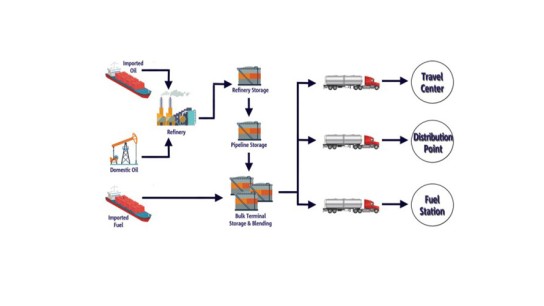
The production and wholesale distribution of refined fuel products is a mature industry evolving over the last 100+ years and involves several integrated oil companies who operate approximately 95,000 miles of pipelines.
From the refining process diesel fuel passes through pipelines, bulk barges and/or railcars, ending up across the country in large bulk storage terminals. Lastly, the product is pumped into tanker trucks which make deliveries to gas stations, distributors, and remote locations.
Diesel Exhaust Fluid (DEF)
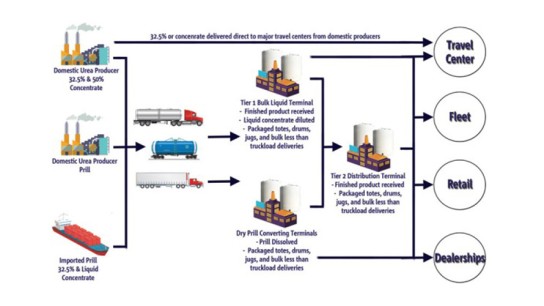
A typical urea producer sells DEF to a limited number of large customers. DEF distribution utilizes a two-tier distribution strategy which helps urea producers manage their capacity and improve working capital.
Tier 1 distributors and national travel centers are the largest DEF customers for urea producers. A Tier 1 distributor receives bulk product (via rail or tank truck) and operates bulk DEF terminal/blending facilities and packaging plants. Tier 1 markets DEF to Tier 2 distributors and high-volume end users (including regional fleets and travel centers) in full railcar loads, tanker truck loads, or packaged good truckload quantities.
Tier 2 distributors are essential in the distribution channel, servicing local markets and the ‘last mile’ of delivery to end customers utilizing smaller bulk storage facilities and warehousing of DEF packaged goods.
Terminal structure
Bulk diesel fuel terminals receive product in its final form and are equipped with tanks capable of holding millions of gallons of finished, ready-to-use petroleum products. These terminals are typically filled directly from pipelines efficiently. There is excellent downstream availability, consistency, and a standardized pricing structure for diesel fuel throughout the market.
However, the cost and reliability of DEF is dependent on how the product arrives at the terminal which varies from location to location; this is a major differentiating factor between DEF and diesel fuel.